
 Wishlist

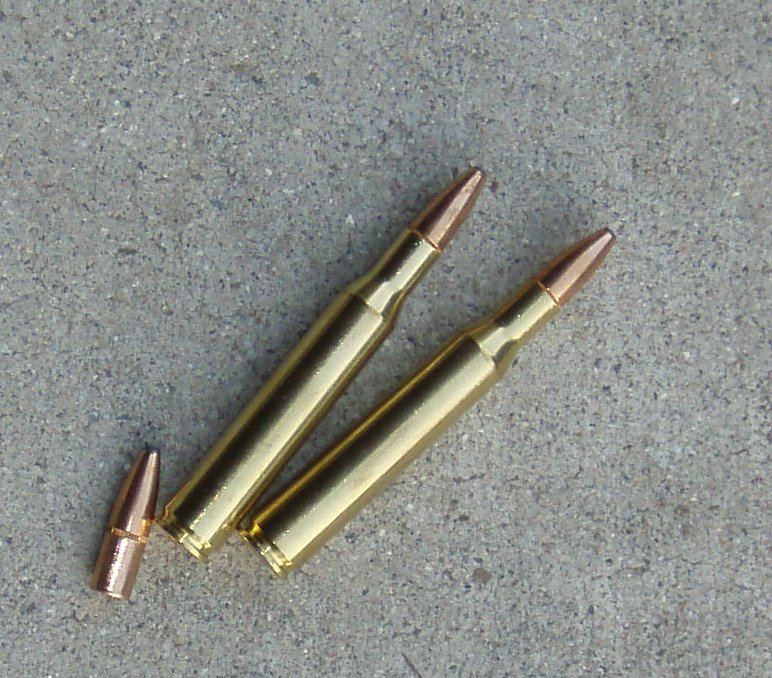
Few hunting cartridges have built a reputation quite like the .270 Winchester. For more than a century, it has been associated with impressive velocity, relatively flat trajectories, and the kind of downrange performance that made it a favorite among generations of American hunters. Long before modern long-range cartridges became popular, the .270 Winchester was already demonstrating that a relatively lightweight bullet traveling at high speed could deliver an effective combination of reach, accuracy, and manageable recoil.
But what do .270 Winchester ballistics actually look like beyond the muzzle? How much velocity does a 130-grain bullet retain at 300 yards? How quickly does bullet drop become significant? And does switching to a heavier 150-grain bullet really make a noticeable difference at longer distances?
Those questions matter because the .270 Winchester's reputation for shooting flat can sometimes make its performance sound almost effortless. In reality, even a fast-moving rifle bullet begins losing velocity as soon as it leaves the barrel. Gravity, aerodynamic drag, wind, and bullet construction all influence what happens downrange. A cartridge that performs exceptionally well at 100 yards can behave very differently at 400 or 500 yards, especially when comparing factory loads with different bullet designs.
The good news is that the .270 Winchester still delivers impressive numbers by modern standards. With common factory ammunition launching bullets in the neighborhood of 2,800 to 3,200 feet per second, depending on the load, it offers plenty of ballistic performance to examine. Let's look at what those numbers mean and why this classic cartridge remains relevant today.
Quick Answer: How Good Are .270 Winchester Ballistics?
The .270 Winchester is known for high muzzle velocity, a relatively flat trajectory, and strong retained energy across common hunting distances. Traditional 130-grain factory loads frequently reach approximately 3,000 to 3,100 fps, while some higher-velocity offerings approach 3,200 fps. Heavier 140- and 150-grain bullets generally start somewhat slower, although their aerodynamic designs can help them retain velocity and energy as distance increases.
For example, Hornady's 130-grain SST Superformance load has a published muzzle velocity of 3,200 fps and muzzle energy of approximately 2,956 ft-lbs. At 300 yards, its listed velocity is 2,583 fps, with 1,926 ft-lbs of retained energy. With a 200-yard zero, the same load is approximately 5.7 inches below the line of sight at 300 yards and 33.7 inches low at 500 yards.
Those numbers help explain the cartridge's reputation. The .270 Winchester combines high initial velocity with useful downrange performance, but it is not immune to bullet drop or wind drift. Its practical range depends on the ammunition, shooting conditions, and the shooter's ability to make an accurate, responsible shot.
What Makes the .270 Winchester Such a Flat-Shooting Cartridge?
Introduced by Winchester in 1925, the .270 Winchester was developed from the .30-03 Springfield case family and uses a .277-inch-diameter bullet. It arrived at a time when hunters were becoming increasingly interested in cartridges capable of producing higher velocities and flatter trajectories than many traditional rifle rounds.
The cartridge's early reputation was closely tied to the performance of its 130-grain bullets. Compared with heavier projectiles fired at more moderate speeds, a relatively light .277-caliber bullet launched at approximately 3,000 fps offered a trajectory that was especially appealing to hunters working in open country. The ability to maintain useful velocity over distance made the .270 Winchester a compelling choice for deer, pronghorn, and other game.
Outdoor writer Jack O'Connor played an important role in popularizing the cartridge. Through decades of hunting stories and magazine articles, he helped establish the .270 Winchester as one of America's most recognizable sporting cartridges. Its reputation was not based on advertising alone. Hunters appreciated a cartridge that combined strong performance with recoil that was generally more manageable than many larger magnum rifle rounds.
Much of the .270's ballistic character comes from the relationship between bullet weight, velocity, and aerodynamic efficiency. A lighter projectile can often be launched faster, reducing its time of flight over a given distance. Less time in flight generally means less gravitational drop, although the exact trajectory also depends on the bullet's ballistic coefficient and the rifle's sight-in distance.
Modern bullet designs have expanded what the cartridge can accomplish. Traditional soft-point ammunition remains widely available, while polymer-tipped, bonded, copper, and high-ballistic-coefficient bullets offer different combinations of retained velocity and terminal performance. As a result, today's .270 Winchester ammunition includes considerably more variety than the classic 130-grain loads that originally made the cartridge famous.
.270 Winchester Ballistics: Velocity and Energy From 100 to 500 Yards
The best way to understand .270 Winchester performance is to examine a specific factory load rather than rely on generalized cartridge averages. Different manufacturers use different bullets, propellants, and loading specifications, which means two cartridges with the same bullet weight can produce noticeably different results.
For this example, we'll use Hornady's 130-grain SST Superformance ammunition. Hornady lists a muzzle velocity of 3,200 fps from a 24-inch test barrel. The following figures represent the manufacturer's published ballistic performance under its stated test conditions.
.270 Winchester 130-Grain Ballistics
Muzzle: 3,200 fps | 2,956 ft-lbs
100 yards: 2,984 fps | 2,570 ft-lbs
200 yards: 2,779 fps | 2,229 ft-lbs
300 yards: 2,583 fps | 1,926 ft-lbs
400 yards: 2,396 fps | 1,656 ft-lbs
500 yards: 2,216 fps | 1,417 ft-lbs
These figures demonstrate how much performance the .270 Winchester retains as distance increases. At 100 yards, the bullet is still traveling close to 3,000 fps. Even at 300 yards, it retains more than 2,500 fps and approximately 1,900 ft-lbs of energy. Those are substantial numbers for a cartridge introduced in the 1920s.
However, the gradual decline in velocity and energy is important. By 500 yards, this particular bullet has lost nearly 1,000 fps compared with its muzzle velocity. Its retained energy has also fallen to less than half its initial value. That doesn't mean the bullet suddenly becomes ineffective at a specific distance, but it illustrates why downrange performance cannot be judged solely by muzzle velocity.
Bullet construction also plays a major role. Hornady's SST is designed for hunting applications, and its behavior at impact depends on velocity and the characteristics of the target. A different 130-grain projectile with another ballistic coefficient or construction could retain energy differently, even if both leave the muzzle at similar speeds.
The key takeaway is that the .270 Winchester starts fast and retains useful performance over considerable distances, but the exact numbers always belong to a particular ammunition load.
.270 Winchester Bullet Drop: How Flat Does It Really Shoot?
One of the most common descriptions of the .270 Winchester is that it shoots flat. That reputation is well deserved compared with many traditional hunting cartridges, but flat does not mean that the bullet travels in a straight line.
Every projectile begins falling under gravity as soon as it leaves the barrel. A rifle's sights are adjusted so the barrel points at a slight upward angle relative to the line of sight, allowing the bullet's curved trajectory to intersect the aiming point at the selected zero distance. This is why a rifle sighted in at 200 yards may print slightly high at 100 yards before the bullet drops below the line of sight farther downrange.
Using Hornady's 130-grain SST Superformance load with a 200-yard zero, the published trajectory looks like this:
100 yards: +1.2 inches
200 yards: 0 inches
300 yards: -5.7 inches
400 yards: -16.7 inches
500 yards: -33.7 inches
At 100 yards, the bullet is traveling slightly above the line of sight. At 200 yards, it intersects the selected zero. By 300 yards, the trajectory is approximately 5.7 inches low, which helps explain why the .270 Winchester has traditionally been considered well suited to hunting across open terrain.
The picture changes considerably as distance increases. At 400 yards, the bullet is nearly 17 inches below the line of sight, and at 500 yards, the drop exceeds 33 inches. Those distances require a much more precise understanding of trajectory than the cartridge's flat-shooting reputation might suggest.
The distinction becomes especially important when comparing rifles sighted in at different distances. A .270 Winchester zeroed at 100 yards will show a different trajectory relative to the line of sight than the same rifle zeroed at 200 yards. Neither trajectory is inherently wrong; they simply represent different sighting configurations.
Barrel length, muzzle velocity, altitude, temperature, and bullet design can also change the results. Published trajectory figures are useful references, but they should never be mistaken for exact predictions of what every rifle will produce in the field.
.270 Winchester 130 vs 140 vs 150 Grain: What's the Difference?
Bullet weight is one of the most important variables when comparing .270 Winchester ammunition. The three most familiar hunting weights are 130, 140, and 150 grains, although other options are available. Each weight offers different characteristics, and the best choice depends on more than which bullet starts fastest.
A lighter bullet can often achieve higher muzzle velocity, while a heavier bullet may offer advantages in sectional density and retained momentum. However, bullet shape, construction, and ballistic coefficient can outweigh simple differences in grain weight. Two projectiles that weigh exactly the same can behave differently once they leave the barrel.
130-Grain .270 Winchester: The Classic High-Velocity Choice
The 130-grain bullet is arguably the weight most closely associated with the .270 Winchester. It helped establish the cartridge's reputation and remains widely used in factory hunting ammunition. Traditional 130-grain loads commonly produce muzzle velocities around 3,000 to 3,100 fps, while higher-velocity offerings such as Hornady Superformance reach approximately 3,200 fps.
That combination of speed and relatively modest bullet weight contributes to the cartridge's flat trajectory. For deer-sized game, suitable 130-grain hunting bullets have been popular for generations, and modern projectile designs offer a variety of expansion and penetration characteristics.
A faster muzzle velocity can also reduce the time a bullet spends traveling to its target, which affects both gravitational drop and wind exposure. However, a lighter bullet with a relatively low ballistic coefficient may lose velocity more quickly than a heavier, more aerodynamic design. This is why the fastest bullet at the muzzle is not necessarily the fastest bullet at every distance.
For many hunters, the 130-grain .270 Winchester represents the cartridge's traditional balance of velocity, trajectory, and recoil. Its long history is one reason it remains a familiar starting point when discussing .270 ballistics.
140-Grain .270 Winchester: A Balance of Speed and Retained Energy
The 140-grain category sits between the traditional 130-grain load and heavier 150-grain options. It offers manufacturers room to combine useful muzzle velocity with bullet designs intended to retain energy and perform consistently at longer distances.
For example, Hornady's 140-grain SST Superformance load is listed at 3,090 fps at the muzzle, producing approximately 2,968 ft-lbs of energy. At 300 yards, published figures show 2,528 fps and 1,986 ft-lbs of retained energy. With a 200-yard zero, its trajectory is approximately 6.1 inches low at that distance.
Compare that with the 130-grain SST Superformance load, which starts faster at 3,200 fps and remains slightly faster at 300 yards. Despite its lower velocity, the 140-grain load retains somewhat more energy at that distance. The difference reflects the relationship between bullet mass, velocity, and aerodynamic performance rather than weight alone.
This is a good example of why comparing cartridges by muzzle velocity can be misleading. A heavier bullet may begin its flight more slowly but still offer competitive downrange performance, particularly when it has an efficient aerodynamic shape.
The 140-grain category is worth considering when evaluating the .270 Winchester's overall capabilities because it demonstrates that the cartridge isn't limited to the classic 130-grain formula.
150-Grain .270 Winchester: Heavier Bullets and Different Priorities
The 150-grain .270 Winchester typically emphasizes a heavier projectile rather than maximum muzzle velocity. Traditional factory loads commonly fall around 2,800 to 2,900 fps, depending on the manufacturer and bullet design.
Federal's published Fusion 150-grain .270 Winchester load, for example, lists a muzzle velocity of 2,850 fps. The same reference gives approximately 2,468 fps at 200 yards, 2,289 fps at 300 yards, and 1,953 fps at 500 yards. Those numbers illustrate how a heavier .270 bullet can maintain useful velocity while starting noticeably slower than many 130-grain loads.
Heavier bullets generally have greater sectional density when comparing projectiles of the same diameter. Sectional density describes how a bullet's mass relates to its frontal area, and it can be relevant to penetration when other factors are comparable. However, bullet construction and impact velocity remain essential considerations.
For larger game, hunters often look toward tougher-constructed bullets, including some 150-grain offerings. That does not mean every 150-grain bullet is automatically better suited to larger animals than every 130-grain bullet. A well-designed lighter bonded or monolithic projectile may perform differently from a conventional heavier soft point.
The practical difference is that 150-grain ammunition offers another balance of velocity, mass, and bullet construction. It broadens the .270 Winchester's versatility rather than replacing the lighter loads that made the cartridge popular.
How Much Energy Does the .270 Winchester Retain Downrange?
Muzzle energy is one of the most frequently quoted measurements in ammunition advertising, but retained energy is often more useful when comparing how cartridges perform at distance. A bullet that begins with substantial energy can lose a significant portion of it as aerodynamic drag reduces velocity.
Kinetic energy depends on both projectile mass and the square of velocity. That relationship explains why relatively small changes in speed can produce meaningful changes in energy. It also explains why heavier bullets may retain competitive energy despite traveling more slowly than lighter projectiles.
The Hornady 130-grain SST Superformance example begins with approximately 2,956 ft-lbs at the muzzle and retains 1,926 ft-lbs at 300 yards. At 500 yards, the published figure falls to 1,417 ft-lbs. Meanwhile, Hornady's 140-grain SST Superformance load starts at approximately 2,968 ft-lbs and retains 1,986 ft-lbs at 300 yards.
Those figures demonstrate that bullet weight alone doesn't determine retained energy. Velocity, bullet shape, and aerodynamic efficiency all matter. A modern projectile designed to reduce drag can sometimes maintain velocity more effectively than a heavier bullet with a less efficient profile.
Energy figures are also not a complete measurement of hunting effectiveness. A bullet's construction, expansion characteristics, impact velocity, penetration, and shot placement all affect terminal performance. Two bullets arriving with similar energy can behave differently because they were designed for different applications.
For understanding .270 Winchester ballistics, retained energy is best treated as one piece of a larger picture. It helps explain how performance changes with distance, but it should not be used as a universal guarantee of effectiveness.
How Far Is the .270 Winchester Effective?
The question of effective range comes up frequently whenever the .270 Winchester is discussed. Its high velocity and relatively flat trajectory have made it popular in open-country hunting, but there is no single distance at which every .270 Winchester load suddenly stops being effective.
The cartridge's ballistic capability extends well beyond typical hunting distances. As the published figures demonstrate, certain factory loads retain substantial velocity and energy at 400 and 500 yards. That performance is part of what made the .270 Winchester so respected long before newer long-range cartridges became fashionable.
However, ballistic capability and practical hunting range are different things. The distance at which a bullet remains supersonic, retains a particular energy figure, or follows a predictable trajectory does not automatically establish an appropriate hunting distance.
Bullet design and impact velocity are especially important. Many hunting projectiles have manufacturer-specified velocity requirements for reliable expansion. A bullet that performs well at closer distances may behave differently after losing several hundred feet per second. Conversely, some modern designs are engineered to maintain useful terminal characteristics at lower impact velocities.
Environmental conditions introduce additional uncertainty. Wind drift becomes increasingly important as distance increases, while changes in temperature, altitude, and atmospheric pressure can influence trajectory. Accurate distance estimation and a stable shooting position also become more critical.
For these reasons, the .270 Winchester's effective hunting range should be evaluated using the specific ammunition, manufacturer guidance, hunting conditions, and the shooter's demonstrated ability. Its impressive ballistics provide useful capability, but they do not eliminate the need for responsible judgment.
.270 Winchester for Deer, Elk, and Other Game
The .270 Winchester has long been associated with deer hunting, and for good reason. Its combination of velocity, trajectory, and available hunting bullets has made it a popular choice for whitetail deer, mule deer, and pronghorn. The cartridge offers a broad selection of factory ammunition, including traditional soft points and modern controlled-expansion designs.
The classic 130-grain .270 load became especially popular because it offered strong velocity and a relatively flat trajectory. For deer-sized game, appropriately constructed bullets in this weight class have a long history of successful use. Modern 130-grain hunting ammunition includes designs with different expansion and penetration characteristics, allowing hunters to select a projectile suited to their intended application.
For larger animals such as elk, bullet construction becomes especially important. Hunters often consider heavier or tougher bullets, including 140- and 150-grain bonded, partitioned, or monolithic designs. These bullets are intended to offer different balances of expansion and penetration, although their suitability depends on the specific product and conditions.
It is a mistake to assume that the heaviest available bullet is always the best option. A 150-grain conventional soft point and a 130-grain premium controlled-expansion bullet may perform differently despite the heavier projectile's greater mass. Manufacturers design hunting bullets for particular performance characteristics, and those differences can be more important than a simple comparison of grain weights.
The .270 Winchester's enduring popularity comes from its versatility. It offers enough variety to cover numerous traditional hunting applications while remaining relatively manageable compared with many magnum cartridges. However, hunters should always consider local regulations, manufacturer recommendations, and the demands of the intended game rather than relying on cartridge reputation alone.
Does Barrel Length Affect .270 Winchester Ballistics?
Barrel length can have a noticeable influence on .270 Winchester velocity, particularly because the cartridge uses a relatively substantial powder charge compared with many smaller rifle rounds. Factory ballistic figures are often measured using test barrels around 24 inches long, while sporting rifles may use shorter or longer barrels.
A longer barrel can provide additional time for expanding propellant gases to accelerate the bullet, although the relationship is not unlimited or perfectly linear. Shortening the barrel generally reduces muzzle velocity, but the amount varies depending on the ammunition, powder characteristics, and firearm.
This matters because the velocity printed on an ammunition box may not match the speed measured from a particular hunting rifle. A load advertised at 3,060 fps from a 24-inch test barrel could produce a lower velocity from a shorter barrel, while another rifle may produce slightly different results even with the same nominal barrel length.
Those differences also affect downrange ballistics. A lower muzzle velocity generally means more time in flight, potentially greater bullet drop, and less retained energy at a given distance. The exact difference depends on the bullet's aerodynamic characteristics and the conditions under which it is fired.
There is no reliable universal rule that every inch of barrel length produces the same velocity change. Published averages can provide context, but actual results depend on the specific firearm and load.
For anyone comparing .270 Winchester ballistic charts, barrel length is one of the first specifications worth checking. Two sets of numbers may appear contradictory when they were simply generated using different test conditions.
How Does Wind Affect .270 Winchester Ballistics?
Bullet drop tends to receive the most attention in discussions about flat-shooting cartridges, but wind can be just as important at longer distances. Even a high-velocity .270 Winchester projectile is affected by crosswinds, and the influence becomes more noticeable as distance increases.
Wind drift depends on several factors, including bullet velocity, ballistic coefficient, wind speed, wind direction, and time of flight. A projectile with a higher ballistic coefficient generally resists aerodynamic drag more effectively, which can help it maintain velocity and reduce wind sensitivity under comparable conditions.
This is one reason modern bullet design matters so much. A heavier, more aerodynamic .270 bullet may begin at a lower muzzle velocity than a lighter projectile yet maintain competitive performance farther downrange. The relationship is not automatic, however, because different bullets have different shapes and drag characteristics.
Wind also varies along a bullet's flight path. Conditions at the firing position may not accurately represent conditions farther downrange, particularly across open fields, valleys, and uneven terrain. As distances increase, those variations can create uncertainty that a simple ballistic chart cannot fully capture.
The .270 Winchester's velocity provides a useful starting advantage, but it doesn't make the cartridge immune to environmental effects. Understanding that limitation is essential when interpreting its long-range performance.
Is the .270 Winchester Still Competitive With Modern Cartridges?
The .270 Winchester celebrated its 100th anniversary in 2025, an impressive milestone for a cartridge that remains widely recognized among American hunters. During that century, ammunition technology has changed dramatically, with improvements in bullet construction, propellants, and aerodynamic design.
Newer cartridges often emphasize high-ballistic-coefficient projectiles, modern rifle configurations, and specialized long-range performance. Those developments have created additional options, but they haven't erased the .270 Winchester's strengths.
A cartridge capable of launching a 130-grain bullet at approximately 3,000 fps or more still offers useful ballistic performance. Modern factory ammunition also allows the .270 to benefit from projectile technology that didn't exist when it was introduced. Polymer tips, bonded cores, and monolithic copper designs have expanded the selection available to shooters who prefer the classic cartridge.
There are limitations. Some traditional .270 Winchester rifles use barrel twist rates intended for conventional hunting bullets rather than unusually long, heavy projectiles. That can influence compatibility with certain modern bullet designs. The cartridge also lacks some of the specialized rifle and ammunition options available for newer long-range platforms.
Nevertheless, the .270 Winchester remains relevant because its core performance is still useful. It doesn't need to outperform every modern cartridge to justify its popularity. Its combination of velocity, manageable recoil, widespread recognition, and hunting history continues to make it a respected choice.
Frequently Asked Questions About .270 Winchester Ballistics
How fast does a .270 Winchester bullet travel?
Typical factory .270 Winchester ammunition launches common 130-grain bullets at approximately 3,000 to 3,100 fps, while some higher-velocity loads reach around 3,200 fps. Heavier 140- and 150-grain loads generally start somewhat slower, depending on the manufacturer and bullet design.
How much does a .270 Winchester drop at 300 yards?
Bullet drop depends on the ammunition and zero distance. Hornady's 130-grain SST Superformance load is listed at approximately 5.7 inches low at 300 yards with a 200-yard zero. Other loads or zero settings will produce different results.
Is a 130-grain or 150-grain .270 Winchester better?
Neither weight is universally better. A 130-grain bullet generally offers higher muzzle velocity in comparable conventional loads, while a 150-grain bullet provides greater mass and may offer different penetration and retained-energy characteristics. Bullet construction and intended use are more important than weight alone.
Can a .270 Winchester reach 500 yards?
Yes. The .270 Winchester is capable of sending bullets well beyond 500 yards, and published factory ballistics demonstrate that certain loads retain substantial velocity at that distance. However, a bullet's ability to reach a target is not the same as establishing an appropriate hunting range.
Is the .270 Winchester good for long-range shooting?
The .270 Winchester offers useful long-range ballistic performance, particularly with aerodynamic bullets. However, dedicated modern long-range cartridges and rifle platforms may provide advantages in projectile selection, barrel compatibility, and specialized competition applications.
Does .270 Winchester have a lot of recoil?
The .270 Winchester generally produces noticeable but manageable recoil in a typical sporting rifle. Felt recoil depends on rifle weight, stock design, ammunition, and the individual shooter. It generally recoils more than mild centerfire cartridges but less than many powerful magnum rifle combinations.
Final Thoughts: Why the .270 Winchester Still Delivers
The .270 Winchester earned its reputation through a combination of high velocity, relatively flat trajectories, and useful retained energy. A century after its introduction, those characteristics remain easy to appreciate. Modern factory ammunition demonstrates that the cartridge can launch 130-grain bullets at impressive speeds while maintaining substantial performance several hundred yards downrange.
But the numbers also reveal important limitations. Velocity decreases, bullet drop increases, and wind becomes more influential as distance grows. By 500 yards, even a fast .270 Winchester load has experienced significant changes in its trajectory and retained energy. Understanding those changes is far more valuable than simply describing the cartridge as flat shooting.
The differences between 130-, 140-, and 150-grain ammunition further demonstrate that bullet weight tells only part of the story. Projectile construction, ballistic coefficient, muzzle velocity, and intended application all influence performance. A lighter bullet may start faster, while a heavier or more aerodynamic design may retain energy differently downrange.
For hunters and recreational shooters, that versatility is part of the .270 Winchester's lasting appeal. It remains a familiar cartridge with a wide selection of ammunition and a history that few modern designs can match.
Whether you're researching .270 Winchester ballistics or comparing factory ammunition for your next range visit, understanding the numbers can help you evaluate different loads more confidently. Visit AmmoBrowser to compare ammunition prices from online retailers and explore available .270 Winchester options.
This article is intended for general educational purposes. Ballistic figures are manufacturer-published reference values for specific ammunition loads and test conditions; actual performance varies by firearm, barrel length, ammunition lot, and environment. Always use ammunition approved by your firearm manufacturer, follow established firearm safety rules, and wear appropriate eye and hearing protection. Hunting decisions should comply with applicable regulations and be guided by suitable ammunition, responsible judgment, and demonstrated shooting ability. Seek instruction from a qualified firearms instructor when developing shooting skills.