
 Wishlist

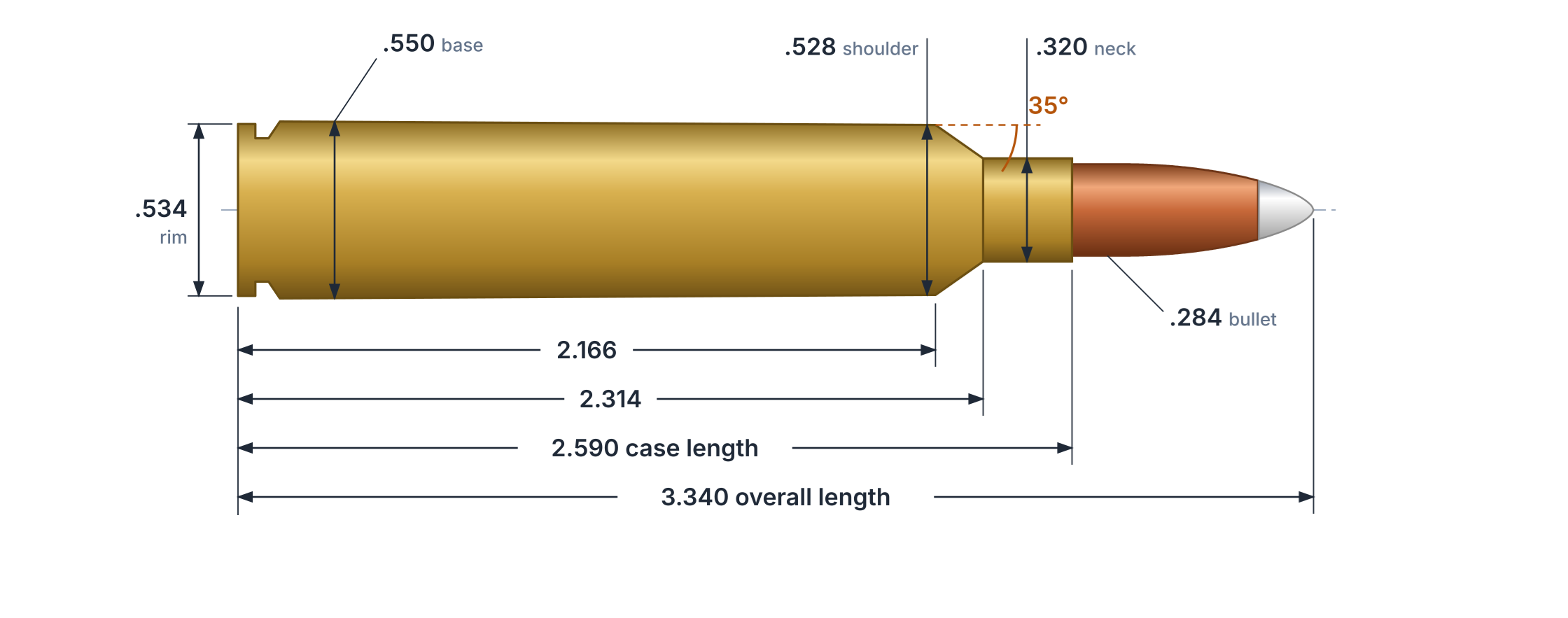
Every few years a new magnum shows up and promises to make the old ones obsolete. The 28 Nosler is one of the few that mostly keeps the promise. It's a 7mm that runs faster than the 7mm Remington Magnum, carries more energy downrange, and shrugs off wind better than most of the cartridges it gets compared to. Nosler markets it as the fastest 7mm you can buy in a factory load, and the numbers back that up.
But speed is never free, and the 28 Nosler charges you in three currencies: recoil, barrel life and money. It kicks noticeably harder than a 7mm Rem Mag. Its barrel is worn out sooner. And it has a reputation for being expensive: a 2023 comparison put factory ammo at roughly $3 to $4 a round, though retailers on Ammo Browser currently list it from as low as $2.15 a round. If you're deciding whether it's worth it, that trade-off is the whole question, and this guide is built to help you answer it.
If you're already shopping, you can check current prices on 28 Nosler ammo while you read. We'll walk through the factory bullet weights and what each is good for, real drop and energy numbers out to 1,000 yards, how the 28 Nosler stacks up against the 7mm Rem Mag and the 300 Win Mag, what the recoil is actually like, and how it behaves on elk and other big game.
The quick version
- What it is: a 7mm (.284 inch) non-belted magnum from Nosler that fits a .30-06 length action.
- Speed: about 3,500 fps with a 140 grain bullet down to about 3,125 fps with a 175 grain bullet, from a 26 inch barrel.
- Energy: roughly 3,750 to 3,870 ft-lbs at the muzzle for the common 160 to 175 grain loads.
- Drop: about 200 to 220 inches at 1,000 yards with a 200 yard zero.
- Versus the 7mm Rem Mag: about 5 to 10 percent more velocity and 15 to 20 percent more energy, per MeatEater, with more recoil, higher ammo cost and shorter barrel life.
- Versus the 300 Win Mag: slightly flatter, with more energy from about 200 yards out, but more recoil, a higher price and shorter barrel life.
- Heads up: Nosler's product page lists a safety recall on its 175 grain AccuBond Long Range ammunition. More on that in the loads section.
What is the 28 Nosler?
The 28 Nosler is a long-range hunting cartridge built by Nosler, and it's the second act in the company's own magnum family. Nosler says it followed the 26 Nosler, which arrived in 2014. Outdoor Life puts the 28's introduction in 2015 and explains where the case came from: it's based on a shortened 7mm Remington Ultra Magnum case, with a 35 degree shoulder and the neck cut down to .276 inch.
The idea behind it is simple. Nosler wanted more power, more velocity and more long-range capability out of a 7mm bullet, without needing a rifle that's longer than a normal bolt action. The result fits a standard .30-06 length action, which is a big part of why rifle makers took to it. Nosler calls it "the most powerful 7mm cartridge commercially available today." That's a manufacturer claim, and Outdoor Life points out that the 7mm Remington Ultra Magnum comes close, but for factory ammo and standard-length rifles, it's a fair description.
Key specs
- Bullet diameter: 7mm, or .284 inch (7.21mm)
- Case length: 2.590 inches, per Tatted Tacticals
- Overall length: 3.340 inches maximum, per Nosler
- Action length: fits a standard .30-06 Springfield length action, per Nosler
- Case type: non-belted
- Case capacity: 93 grains of water, per Nosler (Outdoor Life lists 90 grains with a 175 grain bullet seated)
- Twist rate: 1:9 inch, per Tatted Tacticals
- Maximum pressure: 65,000 psi (SAAMI), per Tatted Tacticals and Outdoor Life, against 61,000 psi for the 7mm Rem Mag
Which rifles chamber it
You won't have the choices you'd have with a 7mm Rem Mag, but the list is decent. MeatEater says the 28 Nosler is offered by Savage, Nosler, Browning, Bergara and Christensen Arms, plus some smaller makers. It adds that these rifles tend to cost more than 7mm Rem Mag rifles, which most manufacturers chamber.
28 Nosler factory loads and bullet weights
If you've shopped for 7mm Rem Mag ammo, the 28 Nosler shelf is going to feel thin. MeatEater says most loads come from Nosler itself, with Federal offering one load and Hornady and Browning one or two each. Its check of MidwayUSA listings found factory bullet weights running from 139 to 185 grains. That's a narrower field, but it covers what most hunters actually need.
Nosler's own loads
The Nosler product page lists these factory loads:
- 150 grain Expansion Tip
- 160 grain Ballistic Tip Hunting
- 160 grain AccuBond Trophy Grade (Nosler describes 3,300 fps as the launch load speed for this one)
- 160 grain Partition Trophy Grade
- 168 grain Custom Competition Match Grade
- 175 grain AccuBond Long Range Trophy Grade
Speed, energy and BC by load
These figures come from Tatted Tacticals and all assume a 26 inch barrel. BC here is the G1 ballistic coefficient, a measure of how well the bullet holds its speed against air resistance. Higher is better.
- 140 grain Nosler AccuBond: 3,500 fps, 3,811 ft-lbs, BC .485
- 160 grain Nosler AccuBond: 3,300 fps, 3,868 ft-lbs, BC .531
- 160 grain Nosler Partition: 3,250 fps, 3,752 ft-lbs, BC .475
- 162 grain Hornady Precision Hunter ELD-X: 3,275 fps, 3,856 ft-lbs, BC .631
- 175 grain Nosler AccuBond Long Range: 3,125 fps, 3,794 ft-lbs, BC .672
MeatEater lists a 150 grain load at 3,250 fps and 3,530 ft-lbs.
Look at how those numbers trade off. The lightest bullet is the fastest and has the lowest BC of the AccuBonds. The heaviest is the slowest and has the best BC by a wide margin. That tension between launch speed and staying power is the thing to understand about every load on this list, and it's why "which bullet weight is best" always depends on how far you plan to shoot.
Barrel length matters
Tatted Tacticals shows the 175 grain AccuBond Long Range dropping from 3,125 fps in a 26 inch barrel to 3,060 fps in a 24 inch barrel, a loss of 65 fps. If you're buying a lighter rifle with a shorter barrel, expect the numbers on the box to run a little high.
What each weight is for
- 140 to 150 grain: the fastest and flattest bullets close in, with a lower BC than the heavier options. A natural fit for deer-sized game at moderate range.
- 160 to 162 grain: the sweet spot for most people. Backfire says Hornady's 162 grain ELD-X is the factory load you're most likely to find on a local store shelf, with Nosler's 175 grain AccuBond the other common option.
- 160 grain Partition: Backfire's author picks this one for elk if ordering online, because it favors deep penetration.
- 168 grain match grade: built for precision shooting and competition, not hunting.
- 175 grain AccuBond Long Range: the highest BC of the group at .672, which helps it hold speed and resist wind past 500 yards. The trade-off is the lowest muzzle velocity.
Safety recall notice
Nosler's product page lists a safety recall for its 28 Nosler 175 grain AccuBond Long Range Trophy Grade ammunition. If you own any, check Nosler's recall notice before you shoot it, and check the status of any box you're thinking of buying. This is the one thing in this guide you should verify directly with Nosler rather than take from us.
A note on price
Prices and stock for 28 Nosler change often, and listings vary a lot between retailers. That's where comparing live listings saves the most money.
28 Nosler ballistics: drop, energy and wind
Here's the honest caveat before any numbers: published ballistics differ by load, barrel length, zero and the calculator behind them. Treat everything below as a good estimate, not a promise.
Your own rifle and a chronograph have the final word.
Bullet drop at 300 to 1,000 yards
Tatted Tacticals lists drop in inches with a 200 yard zero at sea level, from a 26 inch barrel:
- 140 grain AccuBond (3,500 fps): 300 yd -4.8, 400 yd -14.2, 500 yd -29.2, 700 yd -79.5, 1,000 yd -221.8
- 160 grain AccuBond (3,300 fps): 300 yd -5.4, 400 yd -15.8, 500 yd -32.0, 700 yd -83.5, 1,000 yd -218.6
- 162 grain ELD-X (3,275 fps): 300 yd -5.5, 400 yd -16.0, 500 yd -32.0, 700 yd -81.8, 1,000 yd -203.5
- 175 grain AccuBond Long Range (3,125 fps): 300 yd -5.9, 400 yd -16.8, 500 yd -33.0, 700 yd -82.1, 1,000 yd -199.3
The pattern here is the best illustration of speed versus BC you'll find. Out to 500 yards, the fastest bullet drops the least. Somewhere past that, the heavy, slippery bullets catch up and pass it, and by 1,000 yards the slowest 175 grain is dropping about 22 inches less than the 140 grain. Speed wins close in, and BC wins far out. If most of your shooting is inside 400 yards, the extra BC of the heavy bullet buys you very little.
Energy
- Muzzle: about 3,750 to 3,870 ft-lbs for the common 160 to 175 grain loads, per Tatted Tacticals
- 500 yards: about 2,560 ft-lbs for the 175 grain AccuBond Long Range, per the same source
- 700 yards: Outdoor Life puts a 175 grain, .672 BC bullet at over 1,900 ft-lbs
Point-blank range and wind drift
Outdoor Life calculates a maximum point-blank range of 398 yards for a 175 grain, .672 BC bullet at 3,200 fps, using a 337 yard zero that puts the bullet 3.59 inches high at 100 yards. Tatted Tacticals estimates about 330 yards for deer-sized game with the 162 grain ELD-X. Both are useful, and neither is a reason to stop practicing.
Wind is where a good BC really earns its keep. Outdoor Life puts the 10 mph crosswind drift at 6.8 inches at 400 yards for that same bullet, against 7.82 inches for a 7mm Rem Mag. And Sportsmans says the 28 Nosler stays supersonic out to 1,750 yards, which is well past any distance most people should be shooting at an animal.
What hunters report in the field
Paper numbers are one thing. Backfire's author says he can consistently hit at 600 yards in practice, and that 300 yards is no trouble while hunting. He doesn't push extreme ranges when he's actually hunting, which is probably the most useful ballistics advice in this whole guide.
Always check against your own rifle
No single chart covers every load. Ballistics change with bullet, velocity, zero and conditions, so run a calculator with your own chronographed velocity and your actual zero before you shoot at long range.
28 Nosler vs 7mm Rem Mag vs 300 Win Mag
Nobody buys a 28 Nosler in a vacuum. The real question is almost always whether it's worth choosing over the two magnums it's measured against: the 7mm Remington Magnum, which is the cartridge it's trying to beat, and the .300 Winchester Magnum, which is the one most hunters already trust for big game.
28 Nosler vs 7mm Rem Mag
On paper, the 28 Nosler wins. Tatted Tacticals compares a 175 grain 28 Nosler at 3,125 fps and 3,794 ft-lbs against a 175 grain 7mm Rem Mag ELD-X at 2,900 fps and 3,267 ft-lbs. MeatEater sums it up as generally 5 to 10 percent more velocity and 15 to 20 percent more energy. Downrange, Tatted Tacticals shows 33.0 inches of drop at 500 yards for the 28 Nosler against 38.2 for the 7mm, and about 2,560 ft-lbs against about 2,180 ft-lbs.
That's a real advantage. It just comes with a bill:
- Recoil: MeatEater puts the 28 Nosler at about 28 ft-lbs and the 7mm Rem Mag at about 20 ft-lbs.
- Barrel life: Outdoor Life estimates about 1,000 rounds for the 28 Nosler and about 2,000 for the 7mm Rem Mag. MeatEater adds that the 7mm Rem Mag is already famously hard on barrels, and the 28 Nosler is harder still.
- Price and availability: MeatEater's 2023 comparison put 28 Nosler at $3 or more per round, usually around $4, against about $2 for 7mm Rem Mag hunting ammo, with every major maker offering 7mm Rem Mag loads.
Here's the part that surprised me. Both MeatEater and Outdoor Life give the ballistics win to the 28 Nosler, and then both authors say they'd pick the 7mm Rem Mag as their own default. The reasons are lighter recoil, cheaper and more available ammo, and a handier rifle (Outdoor Life notes the 28 Nosler's 26 inch barrel is harder to carry than the 24 inch barrel on a typical 7mm Rem Mag). MeatEater's advice is blunt: "don't feel like you need to upgrade your 7mm Rem. Mag. to be successful."
28 Nosler vs 300 Win Mag
This one is closer than most people expect. Sportsmans compares a 162 grain 28 Nosler to a 180 grain .300 Win Mag:
- Velocity: 3,175 fps against 3,070 fps at the muzzle, and 2,440 fps against 2,156 fps at 500 yards
- Energy: the .300 Win Mag actually leads at the muzzle by 141 ft-lbs (3,767 against 3,626). The 28 Nosler pulls ahead by 200 yards and leads by 284 ft-lbs at 500 yards (2,142 against 1,858)
- Drop at 1,000 yards (300 yard zero): about 201 inches against about 213 inches
- Wind drift (10 mph): 17.94 inches against 19.42 inches at 600 yards, and 55.35 inches against 60.43 inches at 1,000 yards
- Recoil: 29.4 ft-lbs for the 28 Nosler against 25.9 ft-lbs for the .300 Win Mag
- Barrel life: 700 to 900 rounds against 1,000 to 1,500
- Price and availability: the .300 Win Mag is available from more makers, and the 28 Nosler is usually about twice as expensive, with higher-priced rifles
So what does that add up to? Inside 500 yards, both cartridges are enough for nearly any North American game, and the .300 Win Mag's lighter recoil may well decide it for you. Beyond 500 yards on big game, Sportsmans recommends the 28 Nosler for its extra power.
For more on the older magnum, see our 300 Win Mag guide.
Bullet diameter
One more difference worth knowing: the 28 Nosler shoots a 7mm (.284 inch) bullet, while the .300 Win Mag shoots a 7.8mm (.308 inch) bullet. That means each cartridge has its own range of bullet weights and options.
28 Nosler recoil
If the 28 Nosler has one real drawback, it's this. Every source we read agrees that it kicks harder than both the 7mm Rem Mag and the .300 Win Mag. The exact figures vary with rifle weight and the assumptions behind each calculation, but the ranking never changes.
Recoil numbers
The Sportsmans recoil table lists these figures, which come from recoil nomographs, calculators and published formulas:
- 28 Nosler, 160 grain at 3,200 fps, 8.5 lb rifle: 29.4 ft-lbs of recoil energy and 14.9 fps recoil velocity
- .300 Win Mag, 180 grain at 2,960 fps, 8.5 lb rifle: 25.9 ft-lbs and 14.0 fps
- 7mm Rem Mag, 175 grain at 2,870 fps, 9 lb rifle: 21.7 ft-lbs and 12.5 fps
- .30-06, 180 grain at 2,700 fps, 8 lb rifle: 20.3 ft-lbs and 12.8 fps
MeatEater puts the 28 Nosler at about 28 ft-lbs against about 20 ft-lbs for the 7mm Rem Mag. Outdoor Life calculates 39.64 ft-lbs at 17.86 fps for a 175 grain load, against 26.5 ft-lbs at 14.6 fps for the 7mm Rem Mag. Those absolute numbers are higher because of different assumptions, but the ranking is the same in every source.
What it actually feels like
Numbers only go so far, so here's what a real shooter says. The author of the Backfire elk article hunts with a Browning X-Bolt Pro that weighs 6 lb 10 oz unscoped and about 8 lb 8 oz fully set up. With the muzzle brake on, he calls the recoil "quite tolerable" for about 30 practice rounds and a shot or two on a hunt. Without the brake, the rifle kicks hard and is hard on your hearing. He also knows a seasoned shooter who got hit by the scope while shooting it over a puffy coat, and he wouldn't use this rifle for 50 to 100 round sessions.
Posters on a Rokslide thread mostly agree: it kicks hard without a brake, and weight plus a brake or suppressor make a large difference. One poster with near-identical braked 28 Nosler and .300 Win Mag rifles actually found the .300 Win Mag more uncomfortable and credited the brake. That's forum opinion, not measurement, but it points the same direction as everything else.
Managing it
- Rifle weight: a heavier rifle cuts felt recoil.
- Muzzle brake or suppressor: MeatEater recommends one or the other. Brakes are loud, so wear hearing protection and think about the people standing next to you.
- Shoulder and scope setup: check your scope eye relief and length of pull before you shoot a magnum. Scope bite is a real risk.
- Short range sessions: recoil adds up, and a flinch will wreck your accuracy faster than any ballistic advantage can make up for.
Hunting with the 28 Nosler
The 28 Nosler was built for hunters, so this is where it either earns its place or doesn't. Always check your local hunting regulations, and make sure the load you pick is right for your firearm.
Elk and other big game
The Backfire author calls the 28 Nosler one of the best elk cartridges there is, especially at longer range, as long as you pair it with controlled-expansion bullets. His reasoning is worth understanding. Because the cartridge is so fast, he prefers penetration over expansion at distance, which is why he picks the 160 grain Nosler Partition if he's ordering online.
He also has a refreshingly direct take on energy rules of thumb. He calls the common 1,500 ft-lb guideline "conventional (and mostly misguided)," because it ignores shot placement and bullet design. That's his opinion rather than a rule, but it's a good reminder that a big number on a chart doesn't kill an elk. A well-placed bullet that holds together does.
His field results are encouraging, with one caveat. He shot two black wildebeest, about 315 lbs each, with a 163 grain ELD-X. The bullet stayed inside both animals. One dropped immediately and the other ran about 5 seconds. A mature bull elk weighs about 650 lbs, though, so wildebeest results only go so far. And on distance, he practices out to 600 yards but hunts closer, with 300 yards being no trouble.
Deer-sized game
With its flat trajectory, the 28 Nosler has a long point-blank range on deer-sized game. Tatted Tacticals estimates about 330 yards with the 162 grain ELD-X. Most deer, however, are taken much closer than that, so this is a cartridge with far more reach than the average deer hunt needs.
Practical considerations
- Barrel life barely matters if you shoot little. Backfire's author fires about 30 practice rounds and a shot or two on a hunt, which is a very light load on a barrel.
- Rifle handling counts. Outdoor Life notes a 26 inch barrel is harder to carry than the 24 inch barrel on a typical 7mm Rem Mag, and that matters on a long day in steep country.
- Practice at the distance you'll shoot. The long reach is only useful if you can place the shot.
Regulations and ethics
Some states set minimum caliber, bullet or energy rules for big game, so check your state's rules and your unit's rules before you hunt. And remember that being able to reach a target is not the same as being able to make a clean, ethical shot. Shoot at distances you've practiced and can hit consistently.
Which 28 Nosler load should you buy?
After all those numbers, the choice usually comes down to what you're hunting and how far you'll realistically shoot. Here's how I'd match the load to the job:
- Elk and tough big game: the 160 grain Nosler Partition, for deep penetration.
- All-round hunting, and the easiest to find: the 162 grain Hornady Precision Hunter ELD-X, which Backfire says is the most common factory load on local store shelves.
- Long range, 500 yards and beyond: the 175 grain AccuBond Long Range, for its high BC. Check the recall notice on Nosler's page for this load before you buy or shoot it.
- Deer, antelope and lighter game at moderate range: the 150 grain Expansion Tip or 140 grain AccuBond, for the flattest trajectory close in.
- Precision and match use: the 168 grain Custom Competition Match Grade.
And a word about budget, because it's the part most guides skip. If you want to shoot a lot, be realistic. A 7mm Rem Mag or .300 Win Mag costs far less per round and has more load choices, and the 28 Nosler isn't a bulk-practice round. It's a cartridge you buy because you've decided the extra reach is worth paying for.
Once you know which load fits, compare current 28 Nosler prices across retailers before you buy. With roughly 600 listings, there's plenty to compare.
FAQ
How fast is a 28 Nosler? About 3,125 fps with a 175 grain bullet up to about 3,500 fps with a 140 grain bullet, from a 26 inch barrel, according to Tatted Tacticals.
Is the 28 Nosler better than the 7mm Rem Mag? Ballistically, yes. MeatEater gives it the ballistics win, but it also picks the 7mm Rem Mag overall for lower recoil, cheaper ammo, wider availability and easier handling.
28 Nosler vs 300 Win Mag: which is better? The 28 Nosler is slightly flatter and has more energy past about 200 yards, according to Sportsmans. The .300 Win Mag recoils less, costs less and has longer barrel life.
How long does a 28 Nosler barrel last? Sources differ. Sportsmans says 700 to 900 rounds and Outdoor Life estimates about 1,000. MeatEater says the 28 Nosler is harder on barrels than the 7mm Rem Mag, which is itself known for barrel wear.
Is the 28 Nosler good for elk? Backfire's author says it's one of the best elk cartridges when paired with controlled-expansion bullets.
What twist rate does the 28 Nosler use? Tatted Tacticals lists 1:9 inch.
How much does 28 Nosler ammo cost? MeatEater's 2023 comparison put it at $3 to $4 per round. Compare current listings for today's prices.
Is there a recall on 28 Nosler ammo? Nosler's product page lists a safety recall for its 175 grain AccuBond Long Range Trophy Grade ammunition. Check Nosler's notice before using any.
Ballistic figures are based on representative published factory ammunition specifications and calculated muzzle-energy values. Actual velocities and trajectories vary with barrel length, rifle, ammunition lot, and environmental conditions. Always check your local hunting regulations before you hunt, and make sure the load you choose is right for your firearm. Follow firearm and ammunition manufacturer guidance, and confirm your rifle's compatibility with the ammunition selected.