
'%3e%3cpath%20d='M25.8906%2030.68L16.0006%2025L6.14062%2030.68V4.55C6.14063%203.75435%206.4567%202.99129%207.0193%202.42868C7.58191%201.86607%208.34498%201.55%209.14063%201.55H22.8906C23.6863%201.55%2024.4493%201.86607%2025.0119%202.42868C25.5746%202.99129%2025.8906%203.75435%2025.8906%204.55V30.68ZM9.14063%203.55C8.87541%203.55%208.62105%203.65536%208.43352%203.84289C8.24598%204.03043%208.14063%204.28478%208.14063%204.55V27.23L16.0006%2022.72L23.8806%2027.23V4.55C23.8806%204.28478%2023.7753%204.03043%2023.5877%203.84289C23.4002%203.65536%2023.1458%203.55%2022.8806%203.55H9.14063Z'%20fill='white'/%3e%3cpath%20d='M9.14063%202.55H22.8906C23.4211%202.55%2023.9298%202.76071%2024.3048%203.13579C24.6799%203.51086%2024.8906%204.01957%2024.8906%204.55V8.62H7.14062V4.55C7.14063%204.01957%207.35134%203.51086%207.72641%203.13579C8.10148%202.76071%208.61019%202.55%209.14063%202.55Z'%20fill='%238A3301'/%3e%3cpath%20d='M25.8906%209.62H6.14062V4.55C6.14063%203.75435%206.4567%202.99129%207.0193%202.42868C7.58191%201.86607%208.34498%201.55%209.14063%201.55H22.8906C23.6863%201.55%2024.4493%201.86607%2025.0119%202.42868C25.5746%202.99129%2025.8906%203.75435%2025.8906%204.55V9.62ZM8.14063%207.62H23.8906V4.55C23.8906%204.28478%2023.7853%204.03043%2023.5977%203.84289C23.4102%203.65536%2023.1558%203.55%2022.8906%203.55H9.14063C8.87541%203.55%208.62105%203.65536%208.43352%203.84289C8.24598%204.03043%208.14063%204.28478%208.14063%204.55V7.62Z'%20fill='white'/%3e%3cpath%20d='M16%2020.25C15.7348%2020.25%2015.4804%2020.1446%2015.2929%2019.9571C15.1054%2019.7696%2015%2019.5152%2015%2019.25V14.07C15%2013.8048%2015.1054%2013.5504%2015.2929%2013.3629C15.4804%2013.1754%2015.7348%2013.07%2016%2013.07C16.2652%2013.07%2016.5196%2013.1754%2016.7071%2013.3629C16.8946%2013.5504%2017%2013.8048%2017%2014.07V19.25C17%2019.5152%2016.8946%2019.7696%2016.7071%2019.9571C16.5196%2020.1446%2016.2652%2020.25%2016%2020.25Z'%20fill='white'/%3e%3cpath%20d='M18.5999%2017.66H13.4199C13.1547%2017.66%2012.9004%2017.5546%2012.7128%2017.3671C12.5253%2017.1796%2012.4199%2016.9252%2012.4199%2016.66C12.4199%2016.3948%2012.5253%2016.1404%2012.7128%2015.9529C12.9004%2015.7654%2013.1547%2015.66%2013.4199%2015.66H18.5999C18.8651%2015.66%2019.1195%2015.7654%2019.307%2015.9529C19.4946%2016.1404%2019.5999%2016.3948%2019.5999%2016.66C19.5999%2016.9252%2019.4946%2017.1796%2019.307%2017.3671C19.1195%2017.5546%2018.8651%2017.66%2018.5999%2017.66Z'%20fill='white'/%3e%3c/g%3e%3cdefs%3e%3cclipPath%20id='clip0_29353_35'%3e%3crect%20width='32'%20height='32'%20fill='white'/%3e%3c/clipPath%3e%3c/defs%3e%3c/svg%3e) Wishlist
Wishlist
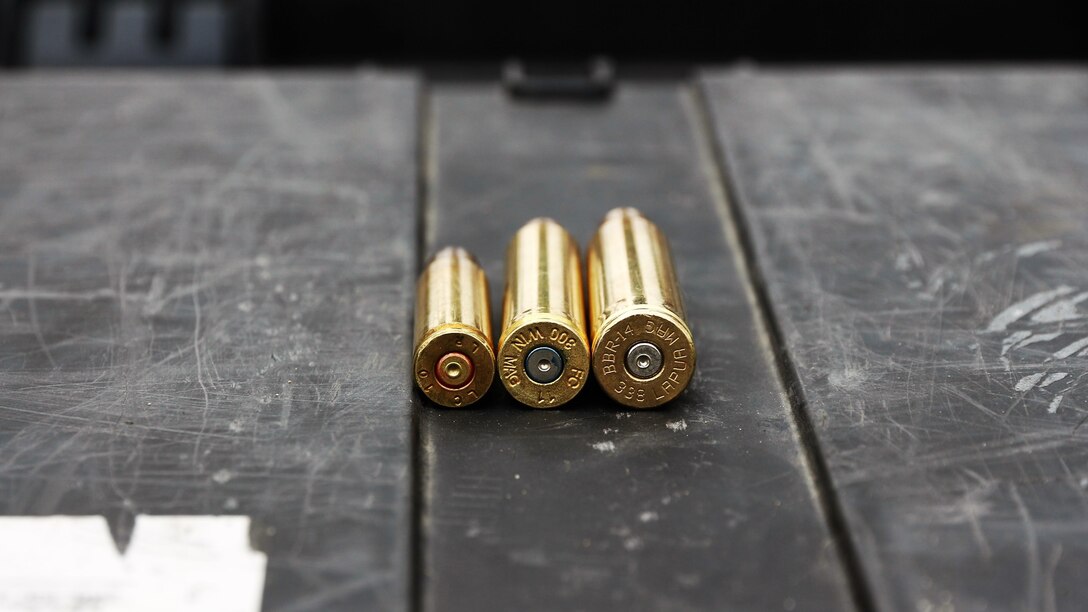
Some rifle cartridges become popular for a few years and then slowly disappear as something newer takes their place. Others survive because they occupy a niche that nobody has quite managed to replace.
The 300 Winchester Magnum belongs in a different category altogether.
Winchester introduced the cartridge in 1963, filling a performance gap between its existing .264 and .338 Winchester Magnum cartridges. More than six decades later, the 300 Win Mag remains widely supported by rifle and ammunition manufacturers and continues to be used for hunting and long range shooting.
That longevity becomes even more impressive when you consider what has happened since 1963. Bullet designs have improved. Ballistic coefficients have climbed. Rangefinders and ballistic calculators have transformed long range shooting. And newer cartridges such as the 300 PRC were designed specifically around long, heavy, aerodynamically efficient bullets.
Yet the 300 Win Mag is still here.
So what exactly did Winchester get right?
Quick Answer
The 300 Win Mag has survived because it combines several characteristics that are difficult to replace all at once. It produces genuine magnum velocity with a huge selection of .30 caliber bullets, fits within a conventional long action, has decades of hunting and long range experience behind it, and benefits from widespread rifle and ammunition support.
It is not a perfect cartridge.
The 300 Win Mag uses an older belted case design. Its relatively short neck and cartridge dimensions were established long before today's extremely long, heavy, high ballistic coefficient bullets became common. Recoil is substantial, ammunition can be expensive, and newer cartridges can make a convincing technical argument in specialized long range applications.
But replacing a cartridge requires more than designing something better on paper.
The 300 Win Mag became the benchmark that newer .30 caliber magnums have to beat.
The 300 Win Mag Wasn't Actually First to the Party
The 300 Winchester Magnum wasn't created in a vacuum.
Powerful .30 caliber magnums already existed long before 1963. The .300 H&H Magnum dates back decades earlier, while the .300 Weatherby Magnum pushed the concept toward substantially greater velocity. Norma introduced the .308 Norma Magnum in 1960, just a few years before Winchester released its own cartridge.
Winchester also already had experience with belted magnums. The company had introduced the .458 Winchester Magnum, followed by the .264 and .338 Winchester Magnums.
What was missing was Winchester's own .30 caliber entry.
Rather than simply necking down the .338 Winchester Magnum, Winchester pushed the shoulder forward and increased case capacity. The resulting cartridge could deliver a significant performance increase over the .30 06 while still fitting a standard length receiver. American Rifleman describes the original advantage as roughly 10 percent greater velocity across the bullet weight spectrum and about 20 percent greater energy than the .30 06.
That was an appealing proposition.
A hunter could get noticeably more velocity and energy without moving to an unusually long action or an obscure cartridge.
Interestingly, the 300 Win Mag was not an instant runaway success. It arrived only a year after the enormously successful 7mm Remington Magnum and at an awkward moment in the history of Winchester's Model 70. Over time, however, the cartridge built the reputation that mattered more than launch hype.
That reputation eventually became one of its greatest advantages.
What Makes a 300 Win Mag a Magnum?
The easiest answer is velocity.
The 300 Win Mag uses a large case to propel .308 inch diameter bullets considerably faster than many conventional .30 caliber cartridges can manage with comparable projectile weights.
That additional velocity changes several things at once.
It can produce a flatter trajectory over useful distances. It increases energy. It can extend the distance at which a hunting bullet remains within its intended performance window. And when combined with an aerodynamically efficient projectile, it can produce excellent long range performance.
But there is no single number that represents "300 Win Mag ballistics."
That's an important distinction.
A lighter 150 grain hunting load and a heavy match load may share the same cartridge designation while behaving quite differently. Bullet weight, projectile construction, ballistic coefficient, barrel length and the particular factory loading all affect what happens after the trigger is pulled.
This is one reason shopping for 300 Win Mag ammunition based solely on the cartridge name doesn't tell you enough.
The bullet inside the cartridge matters enormously.
150, 165, 180, and 200 Grain 300 Win Mag Ammo
One reason the 300 Win Mag has remained useful for so long is the enormous range of .30 caliber projectiles available for it.
You will commonly encounter ammunition in the neighborhood of 150, 165, 180, 190, 200 grains and heavier, although individual manufacturers don't necessarily offer every weight.
Each represents a different way of taking advantage of the cartridge.
150 Grain
Lighter 150 grain bullets can be driven very quickly.
That velocity can produce a relatively flat trajectory, and lighter bullets have historically been useful for hunters who value speed and don't require an especially heavy projectile.
The tradeoff is that lighter bullets generally don't have the same combination of mass and ballistic coefficient available from heavier, longer projectiles.
That doesn't make 150 grain ammunition bad. It simply means speed is a larger part of the reason for choosing it.
165 Grain
The 165 grain class occupies an interesting middle ground.
It offers more projectile mass than a 150 while still allowing the 300 Win Mag to take advantage of substantial velocity. For hunters who don't feel they need a 180 grain or heavier projectile, 165 grain ammunition can offer an attractive balance.
This is where bullet construction starts becoming just as important as bullet weight.
Two 165 grain bullets can be designed very differently. One may emphasize rapid expansion, while another may be constructed for greater penetration and weight retention.
Simply seeing "165 grain" on two boxes does not mean those cartridges are intended to behave identically.
180 Grain
If there is a bullet weight that feels almost synonymous with the traditional 300 Win Mag, 180 grains has a strong claim to that position.
There is a good reason.
A 180 grain .30 caliber projectile provides enough mass for a wide range of hunting applications while still allowing the cartridge to produce substantial velocity. Historical factory figures around 3,000 fps with 180 grain bullets helped establish the performance reputation of the cartridge.
That combination proved useful enough that generations of hunters never had much reason to abandon it.
The 180 grain category is also a perfect example of why the 300 Win Mag became so versatile. Change the projectile construction and the same general bullet weight can serve very different purposes.
190, 200 Grain and Heavier
This is where the modern story becomes especially interesting.
Heavy .30 caliber bullets can offer excellent ballistic coefficients, particularly when their shape is optimized for long range flight. A higher ballistic coefficient helps a projectile retain velocity and resist aerodynamic drag more effectively.
That means a heavier bullet that starts slower can eventually offer advantages over a lighter, faster projectile as distance increases.
This is also where the age of the 300 Win Mag design begins to show.
The cartridge was created decades before today's extremely long, heavy .30 caliber match bullets existed. It can certainly use heavy bullets, and modern rifles can be configured around them, but newer cartridges such as the 300 PRC were designed from the beginning with those projectiles in mind.
That difference will become important later.
Why 300 Win Mag Ballistics Still Get Attention
Magnum cartridges tend to produce numbers that look impressive on a box.
But the useful part of 300 Win Mag performance isn't simply a giant muzzle velocity figure.
It's the combination of velocity and bullet selection.
A light projectile can emphasize speed. A traditional 180 grain hunting load provides a combination of velocity and mass that has been proven for decades. A heavier, high BC projectile can sacrifice some initial speed in exchange for better retained performance farther downrange.
That's why comparing only muzzle velocity can be misleading.
Imagine two bullets leaving the barrel at different velocities. The faster bullet has the early advantage. But if the slower projectile has a significantly better ballistic coefficient, it may lose velocity more slowly.
As distance increases, the relationship between them changes.
This is one of the biggest developments in how shooters think about magnum cartridges today.
For decades, the formula for performance often seemed simple:
More velocity was better.
Modern long range shooting has put much more emphasis on retained velocity, ballistic coefficient, wind performance and consistency.
The remarkable thing is that the 300 Win Mag has adapted reasonably well to that change despite being designed in another era.
Why Hunters Fell in Love With It
The long range reputation of the 300 Win Mag sometimes overshadows the reason many people bought one in the first place.
It's an extremely capable hunting cartridge.
Its combination of velocity and .30 caliber bullet selection made it useful across a broad spectrum of hunting situations. The cartridge gained a worldwide hunting reputation over decades, and that history created something newer cartridges cannot manufacture overnight: confidence. Boone and Crockett describes it as a cartridge that eventually became one of the world's most popular magnums despite its relatively slow start.
Hunters learned what particular loads did in their rifles. Ammunition companies developed more bullets for it. Rifle manufacturers chambered more rifles for it. Those rifles created more ammunition demand, which encouraged manufacturers to keep producing more ammunition.
That cycle matters.
When a cartridge becomes widely established, popularity itself becomes an advantage.
A technically impressive newcomer may outperform it in a particular measurement, but the newcomer still has to convince someone to buy a different rifle, find ammunition, learn a new ballistic profile and potentially give up decades of accumulated familiarity.
For many hunters, the question isn't:
Can I find a newer cartridge with some technical advantages?
The question is:
What isn't my 300 Win Mag already doing that I actually need?
That's a much harder question for a new cartridge to answer.
The Price You Pay for All That Performance
The 300 Win Mag isn't magic.
Producing magnum performance comes with tradeoffs, and recoil is one of the obvious ones.
A rifle firing a heavy projectile at high velocity is going to produce considerably more recoil than a milder cartridge in an otherwise comparable rifle. Actual felt recoil depends on rifle weight, stock design, projectile weight, velocity, muzzle devices and the shooter, so reducing the cartridge to one universal recoil number isn't particularly helpful.
But there is no reason to pretend it is mild.
For some shooters, the extra performance is worth it. For others, especially when most shots occur at moderate distances, a less powerful cartridge may be easier and more pleasant to shoot.
That matters because theoretical ballistic capability isn't useful if increased recoil causes a shooter to perform worse.
There is also ammunition consumption to consider.
Magnum ammunition generally uses more material and more propellant than smaller cartridges, and premium hunting or match bullets add additional cost. Barrel life can also become a consideration for shooters who fire large volumes of high velocity magnum ammunition.
These aren't necessarily reasons to avoid 300 Win Mag.
They're simply part of the bargain.
You get magnum performance because you're burning enough powder to create magnum performance.
Is the 300 Win Mag Still a Serious Long Range Cartridge?
Absolutely.
But this is where we need to separate two questions.
The first is:
Can the 300 Win Mag perform extremely well at long distance?
Yes.
The second is:
If someone were designing a .30 caliber long range magnum from scratch today, would they design it exactly like the 300 Win Mag?
Probably not.
Those answers aren't contradictory.
The 300 Win Mag has a long history in long range target shooting and has been used extensively in precision applications. Modern high BC projectiles have only increased what capable rifles and ammunition can accomplish with it.
But the cartridge still carries design decisions made in the early 1960s.
Its belted case and short neck belong to an earlier period of cartridge design. The maximum overall cartridge length also creates limitations when very long bullets are seated while maintaining compatibility with standard dimensions.
Modern rifles can work around some of those limitations, but newer cartridges don't necessarily need to.
And that brings us to perhaps the best example of why the 300 Win Mag's continued popularity is so impressive.
If 300 PRC Is More Modern, Why Didn't It Replace 300 Win Mag?
The 300 PRC is an excellent demonstration of how cartridge design philosophy has changed.
Hornady designed the 300 PRC specifically around long, heavy, high performance .30 caliber bullets. It uses an unbelted case, headspaces on a 30 degree shoulder and provides room for long projectiles without pushing as much of the bullet down into the powder space. Hornady describes the cartridge as being designed from the start around heavy for caliber bullets and aerodynamic performance.
Typical specifications also call for a faster rifling twist than traditional 300 Win Mag rifles, helping stabilize some of today's extremely long projectiles. Outdoor Life's comparison highlights the contrast between the modern design philosophy of the 300 PRC and the much older geometry of the 300 Win Mag.
On paper, that's a compelling argument.
If you were starting with a blank sheet of paper and wanted to create a .30 caliber magnum specifically for modern extreme distance shooting, there are good reasons to prefer the newer approach.
But that doesn't make the 300 Win Mag suddenly stop working.
And that's the important part.
The 300 Win Mag already had more than half a century to build an ecosystem before 300 PRC arrived. There are countless rifles chambered for it, extensive factory ammunition options, enormous projectile selection and generations of shooters who already understand what the cartridge can do.
A modern design can solve technical compromises.
It cannot instantly reproduce sixty years of adoption.
For readers interested specifically in the differences between these two cartridges, our 300 PRC vs. 300 Win Mag comparison goes much deeper into that matchup.
The Real Advantage of Being Popular
Popularity sounds like a boring reason to choose ammunition until you're standing in front of an ammunition shelf.
A cartridge can have outstanding ballistic specifications and still be inconvenient if ammunition selection is limited.
The 300 Win Mag doesn't have that problem to nearly the same degree.
Because it has been popular for so long, ammunition manufacturers have had decades to develop loads around different purposes. Hunters can choose among numerous projectile constructions and weights. Long range shooters have match options. Major rifle manufacturers have offered rifles chambered for it across many price ranges.
That availability creates flexibility.
It also makes the cartridge easier to understand.
There are enormous amounts of published ballistic data, field experience and load information available. If someone wants to know how a particular bullet weight behaves from a 300 Win Mag, chances are somebody has already spent years experimenting with something similar.
This is an advantage that doesn't show up in a ballistic calculator.
And it may be one of the biggest reasons the cartridge is so difficult to displace.
Which 300 Win Mag Bullet Weight Should You Choose?
There isn't one answer for everyone.
If you're comparing factory ammunition, I'd resist the temptation to start by deciding that one bullet weight is automatically best.
Instead, start with the intended purpose.
A lighter projectile may emphasize velocity. A traditional 180 grain hunting load offers a balance that has made it popular for decades. Heavier, high BC bullets become increasingly interesting when retained velocity and long range performance matter.
Then look at bullet construction.
That's every bit as important as the number of grains printed on the box.
A 180 grain hunting bullet designed for controlled expansion is not equivalent to a 180 grain target projectile simply because both weigh the same amount. Likewise, two hunting bullets of identical weight may behave differently because their construction and intended performance differ.
This is why "What grain should I shoot?" is often the wrong first question.
A better question is:
What am I asking this ammunition to do?
Once you know that, bullet weight becomes much easier to evaluate.
Is 300 Win Mag Overkill?
Sometimes.
That's not an insult to the cartridge.
If someone spends most of their time shooting targets at modest distances or hunting situations where a substantially milder cartridge already provides everything required, the additional recoil, ammunition cost and performance of a 300 Win Mag may not offer much practical benefit.
More power isn't automatically more useful.
But the opposite mistake is pretending the cartridge's performance exists only for bragging rights.
For hunters and long range shooters who actually benefit from its velocity, projectile selection and retained performance, the capability is real.
The key is matching the cartridge to the job rather than choosing it simply because "magnum" sounds better.
Why 300 Win Mag Ammo Selection Matters
The enormous selection of ammunition is one of the cartridge's greatest strengths, but it also makes choosing a box more complicated.
Two boxes labeled 300 Win Mag can contain ammunition designed around completely different priorities.
One may use a lighter hunting bullet intended to emphasize velocity. Another might carry a heavier controlled expansion projectile. Another may be loaded around an aerodynamically efficient bullet intended for long range shooting.
That's why comparing 300 Win Mag ammunition should involve more than looking at price.
Check projectile weight, bullet construction, intended use and published ballistic data. And remember that advertised velocity is normally generated under specified test conditions. Your rifle may produce different numbers because barrel length and other factors can affect actual velocity.
So Why Is a 60 Year Old Cartridge Still So Hard to Beat?
Because the 300 Win Mag never needed to be perfect.
It needed to be useful.
Winchester created a cartridge in 1963 that delivered a meaningful velocity increase over conventional .30 caliber cartridges while fitting into a practical rifle platform. Hunters adopted it.
Ammunition companies supported it. Rifle manufacturers chambered for it. Long range shooters discovered what it could do. Better bullets extended its capabilities even further.
Then newer cartridges arrived.
Some offered more efficient case designs. Some were better suited to extremely long, high BC projectiles. Some addressed compromises that were baked into the 300 Win Mag more than half a century earlier.
And yet the old Winchester kept doing what it had always done.
It still launches excellent .30 caliber bullets at serious velocity. It still offers the flexibility to move from lighter, faster projectiles to heavy, aerodynamically efficient bullets. It still has an enormous body of hunting and long range experience behind it.
Most importantly, ammunition and rifles are still widely supported.
The 300 PRC proves that cartridge design has moved forward. It doesn't prove the 300 Win Mag stopped being effective.
That's the distinction that explains its longevity.
The 300 Win Mag isn't still popular because cartridge development stopped in 1963. It's still popular because everything that came afterward had to compete with a cartridge that was already extremely capable.
After more than sixty years, that's proving surprisingly difficult.
Information provided by AmmoBrowser is for general informational and educational purposes only. Ammunition specifications, ballistics, performance, pricing, and availability can vary by manufacturer, load, firearm, barrel length, and other conditions. While we strive to provide accurate and current information, AmmoBrowser makes no guarantee regarding its completeness or accuracy. Always follow firearm and ammunition manufacturer instructions, verify that ammunition is compatible with your firearm, and follow all applicable laws and safe firearm handling practices.