
'%3e%3cpath%20d='M25.8906%2030.68L16.0006%2025L6.14062%2030.68V4.55C6.14063%203.75435%206.4567%202.99129%207.0193%202.42868C7.58191%201.86607%208.34498%201.55%209.14063%201.55H22.8906C23.6863%201.55%2024.4493%201.86607%2025.0119%202.42868C25.5746%202.99129%2025.8906%203.75435%2025.8906%204.55V30.68ZM9.14063%203.55C8.87541%203.55%208.62105%203.65536%208.43352%203.84289C8.24598%204.03043%208.14063%204.28478%208.14063%204.55V27.23L16.0006%2022.72L23.8806%2027.23V4.55C23.8806%204.28478%2023.7753%204.03043%2023.5877%203.84289C23.4002%203.65536%2023.1458%203.55%2022.8806%203.55H9.14063Z'%20fill='white'/%3e%3cpath%20d='M9.14063%202.55H22.8906C23.4211%202.55%2023.9298%202.76071%2024.3048%203.13579C24.6799%203.51086%2024.8906%204.01957%2024.8906%204.55V8.62H7.14062V4.55C7.14063%204.01957%207.35134%203.51086%207.72641%203.13579C8.10148%202.76071%208.61019%202.55%209.14063%202.55Z'%20fill='%238A3301'/%3e%3cpath%20d='M25.8906%209.62H6.14062V4.55C6.14063%203.75435%206.4567%202.99129%207.0193%202.42868C7.58191%201.86607%208.34498%201.55%209.14063%201.55H22.8906C23.6863%201.55%2024.4493%201.86607%2025.0119%202.42868C25.5746%202.99129%2025.8906%203.75435%2025.8906%204.55V9.62ZM8.14063%207.62H23.8906V4.55C23.8906%204.28478%2023.7853%204.03043%2023.5977%203.84289C23.4102%203.65536%2023.1558%203.55%2022.8906%203.55H9.14063C8.87541%203.55%208.62105%203.65536%208.43352%203.84289C8.24598%204.03043%208.14063%204.28478%208.14063%204.55V7.62Z'%20fill='white'/%3e%3cpath%20d='M16%2020.25C15.7348%2020.25%2015.4804%2020.1446%2015.2929%2019.9571C15.1054%2019.7696%2015%2019.5152%2015%2019.25V14.07C15%2013.8048%2015.1054%2013.5504%2015.2929%2013.3629C15.4804%2013.1754%2015.7348%2013.07%2016%2013.07C16.2652%2013.07%2016.5196%2013.1754%2016.7071%2013.3629C16.8946%2013.5504%2017%2013.8048%2017%2014.07V19.25C17%2019.5152%2016.8946%2019.7696%2016.7071%2019.9571C16.5196%2020.1446%2016.2652%2020.25%2016%2020.25Z'%20fill='white'/%3e%3cpath%20d='M18.5999%2017.66H13.4199C13.1547%2017.66%2012.9004%2017.5546%2012.7128%2017.3671C12.5253%2017.1796%2012.4199%2016.9252%2012.4199%2016.66C12.4199%2016.3948%2012.5253%2016.1404%2012.7128%2015.9529C12.9004%2015.7654%2013.1547%2015.66%2013.4199%2015.66H18.5999C18.8651%2015.66%2019.1195%2015.7654%2019.307%2015.9529C19.4946%2016.1404%2019.5999%2016.3948%2019.5999%2016.66C19.5999%2016.9252%2019.4946%2017.1796%2019.307%2017.3671C19.1195%2017.5546%2018.8651%2017.66%2018.5999%2017.66Z'%20fill='white'/%3e%3c/g%3e%3cdefs%3e%3cclipPath%20id='clip0_29353_35'%3e%3crect%20width='32'%20height='32'%20fill='white'/%3e%3c/clipPath%3e%3c/defs%3e%3c/svg%3e) Wishlist
Wishlist
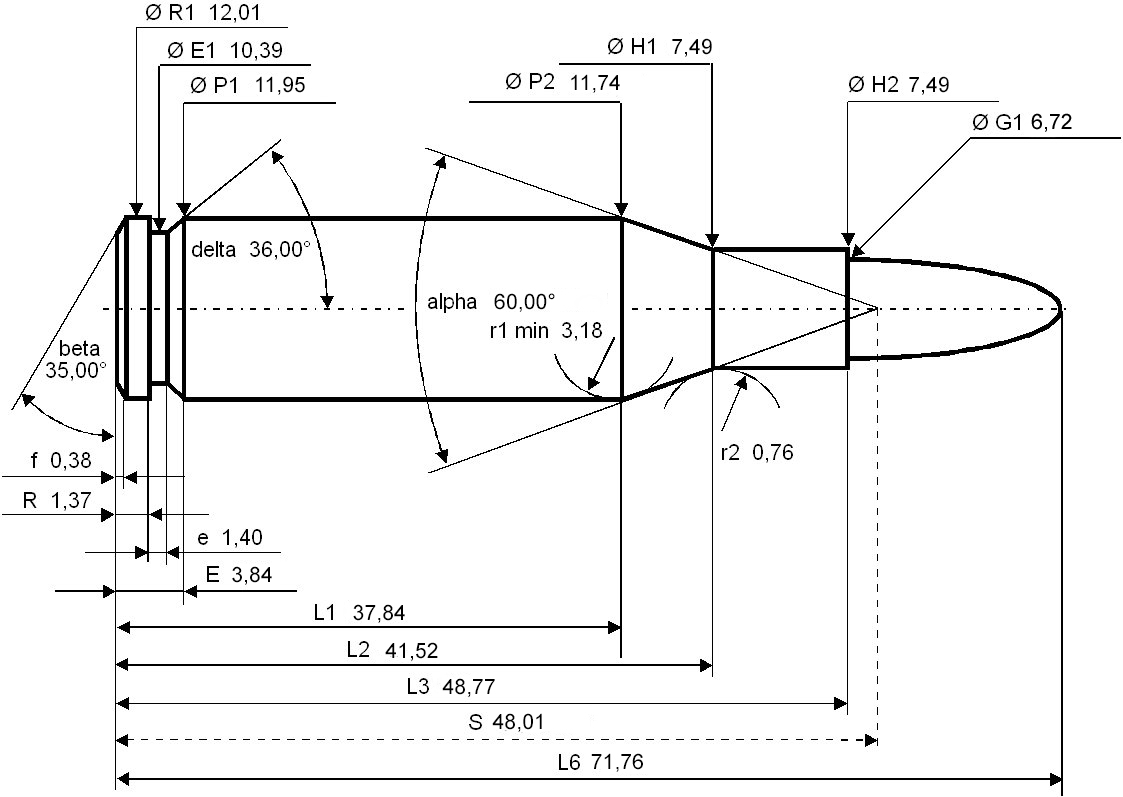
There is a reason people searching for 6.5 Creedmoor ballistics usually want a chart. This is a cartridge where the numbers are a huge part of the story.
A 6.5 Creedmoor might leave the muzzle somewhere around 2,650 to 2,900 fps depending on bullet weight and load, but muzzle velocity only tells you what happens at the beginning. What made the cartridge famous is what happens hundreds of yards later.
The catch is that there is no universal 6.5 Creedmoor ballistics chart. A 120 grain bullet doesn't fly like a 147 grain bullet. Two 140 grain loads can have different velocities and ballistic coefficients. Barrel length matters, and trajectory changes depending on zero distance, sight height and atmospheric conditions.
So rather than pretend every box of 6.5 Creedmoor produces identical numbers, we're going to look at actual published loads and clearly identify which data belongs to which ammunition.
Quick 6.5 Creedmoor Ballistics
If you just want a general idea of what factory 6.5 Creedmoor ammunition looks like, these numbers put the cartridge into perspective:
- Common bullet weights: 120, 129, 130, 140, 143 and 147 grains
- Typical lighter load muzzle velocity: roughly 2,800 to 2,900 fps
- Typical 140 grain muzzle velocity: roughly 2,650 to 2,700 fps
- Typical 143 grain muzzle velocity: around 2,700 fps
- Typical 147 grain muzzle velocity: roughly 2,650 to 2,700 fps
- Common test barrel length: 24 inches
- 140 grain Federal MatchKing velocity at 500 yards: 1,905 fps
- 143 grain Black Hills ELD X velocity at 500 yards: 2,030 fps
- 143 grain Black Hills ELD X energy at 500 yards: 1,308 ft lb
- 143 grain Black Hills ELD X drop at 500 yards: 44.4 inches with the published zero setup
Those last few numbers are where things get interesting. Two bullets separated by only three grains can produce noticeably different downrange performance because bullet design and ballistic coefficient matter in addition to weight.
143 Grain 6.5 Creedmoor Ballistics
Let's start with an actual factory load for which we have velocity, energy and trajectory data through 500 yards.
The Black Hills 143 grain ELD X was tested from a 24 inch barrel with a muzzle velocity of 2,700 fps.
Velocity
- Muzzle: 2,700 fps
- 100 yards: 2,557 fps
- 200 yards: 2,419 fps
- 300 yards: 2,285 fps
- 400 yards: 2,156 fps
- 500 yards: 2,030 fps
Energy
- Muzzle: 2,315 ft lb
- 100 yards: 2,076 ft lb
- 200 yards: 1,858 ft lb
- 300 yards: 1,658 ft lb
- 400 yards: 1,475 ft lb
- 500 yards: 1,308 ft lb
Trajectory
For the published trajectory setup:
- Muzzle: 1.5 inches low
- 100 yards: 1.9 inches high
- 200 yards: zero
- 300 yards: 7.9 inches low
- 400 yards: 22.4 inches low
- 500 yards: 44.4 inches low
That's a very useful snapshot of what makes 6.5 Creedmoor work. After traveling 500 yards, this particular 143 grain load is still moving just over 2,000 fps and carrying more than 1,300 ft lb of energy.
Notice something else about the trajectory. This load is using a 200 yard zero, which is why it is 1.9 inches high at 100 yards and back to zero at 200. If you compare it with a ballistics chart based on a 100 yard zero, the drop numbers will be different even if the ammunition is identical.
140 Grain 6.5 Creedmoor Ballistics
The 140 grain class is probably the weight most closely associated with 6.5 Creedmoor target shooting, but even within the same bullet weight, the numbers can vary significantly.
A Federal 140 grain MatchKing load tested from a 24 inch barrel produced:
Velocity
- Muzzle: 2,675 fps
- 100 yards: 2,509 fps
- 200 yards: 2,350 fps
- 300 yards: 2,196 fps
- 400 yards: 2,048 fps
- 500 yards: 1,905 fps
Energy
- Muzzle: 2,224 ft lb
- 100 yards: 1,957 ft lb
- 200 yards: 1,716 ft lb
- 300 yards: 1,499 ft lb
- 400 yards: 1,303 ft lb
- 500 yards: 1,128 ft lb
Trajectory
- 100 yards: 2.0 inches high
- 200 yards: zero
- 300 yards: 8.4 inches low
- 400 yards: 23.9 inches low
- 500 yards: 47.5 inches low
Compare that with the 143 grain Black Hills load above. The 143 grain load is actually moving 125 fps faster at 500 yards, despite carrying the heavier projectile.
That's exactly why looking only at grain weight can be misleading.
Another 140 Grain Load Produces Different Numbers
Now look at a 140 grain Sellier & Bellot FMJ from the same published comparison.
Velocity
- Muzzle: 2,657 fps
- 100 yards: 2,476 fps
- 200 yards: 2,307 fps
- 300 yards: 2,149 fps
- 400 yards: 2,003 fps
Energy
- Muzzle: 2,202 ft lb
- 100 yards: 1,911 ft lb
- 200 yards: 1,659 ft lb
- 300 yards: 1,440 ft lb
- 400 yards: 1,250 ft lb
Trajectory
- 200 yards: zero
- 300 yards: 3.7 inches low
- 400 yards: 14 inches low
- 500 yards: 31.8 inches low
The exact published trajectory setup differs from the Federal data, so these drop figures shouldn't be treated as a perfectly controlled head to head comparison. But the velocity numbers make the larger point clear: "140 grain 6.5 Creedmoor" is not a single ballistic specification.
140 Grain Bullet Ballistic Coefficient
This is one reason 140 grain match ammunition has such a strong reputation.
Hornady's current published BC data for its 140 grain ELD Match varies with velocity, listing G1 figures of approximately:
- Higher velocity range: .646 G1
- Intermediate velocity range: .637 G1
- Lower velocity range: .616 G1
Hornady also publishes corresponding G7 values of:
- .326 G7
- .320 G7
- .310 G7
That aerodynamic efficiency helps explain why a 140 grain 6.5mm projectile can remain competitive at distances where muzzle velocity by itself no longer tells the whole story.
147 Grain 6.5 Creedmoor Ballistics
The 147 grain class takes the idea even further.
Hornady publishes particularly high ballistic coefficients for its 147 grain ELD Match:
- G1 BC: as high as .697
- G7 BC: as high as .351
- Intermediate G1: .662
- Intermediate G7: .332
- Lower velocity G1: .637
- Lower velocity G7: .321
That's an exceptionally aerodynamic projectile for factory 6.5 Creedmoor ammunition.
Hornady's senior ballistician has also stated that the 147 grain ELD Match can remain supersonic to approximately 1,400 yards at sea level from the Creedmoor under the conditions being discussed. That doesn't mean every rifle and every atmospheric condition will produce exactly that result, but it illustrates why heavy 6.5mm match bullets have become so closely associated with long range shooting.
147 Grain Velocity Changes Dramatically With Barrel Length
RifleShooter tested 147 grain Hornady ELD Match while shortening the same barrel from 26 inches to 17 inches.
The two endpoints tell the story:
- 26 inch barrel: 2,728 fps
- 17 inch barrel: 2,492 fps
- Total velocity loss: 236 fps
- Average loss across the test: 26 fps per inch
- Individual one inch changes: ranged from a 1 fps gain to a 40 fps loss
That last number matters.
You will often hear someone say that 6.5 Creedmoor loses exactly 20, 25 or 30 fps for every inch of barrel removed. Real testing shows it isn't that clean. The average can be useful, but the actual change from one inch to the next varies.
120 Grain 6.5 Creedmoor Ballistics
Lighter bullets move the Creedmoor toward the opposite end of the spectrum: more initial velocity and less projectile mass.
RifleShooter's Federal American Eagle 120 grain OTM test produced:
- 26 inch barrel: 2,885 fps
- 17 inch barrel: 2,643 fps
- Total velocity loss: 242 fps
- Average loss: 27 fps per inch
- Largest measured one inch loss: 42 fps
- Smallest measured one inch loss: 10 fps
A separate earlier barrel test using Hornady 120 grain A MAX produced:
- 27 inch barrel: 2,961 fps
- 24 inch barrel: 2,918 fps
- 16 inch barrel: 2,728 fps
- Total 27 to 16 inch loss: 233 fps
- Average loss: 21.8 fps per inch
Those two tests also demonstrate why we shouldn't make a universal statement such as "120 grain 6.5 Creedmoor travels at 2,900 fps." Different ammunition, barrels and conditions produce different numbers.
129 Grain 6.5 Creedmoor Ballistics
RifleShooter also tested Hornady American Whitetail with a 129 grain InterLock.
- 26 inch barrel: 2,845 fps
- 17 inch barrel: 2,642 fps
- Total velocity loss: 203 fps
- Average loss: 23 fps per inch
- Individual one inch changes: 7 to 37 fps
This puts the 129 grain class in an interesting position. It gives up some of the raw muzzle speed available from lighter 120 grain ammunition while remaining noticeably faster than many 140 and 147 grain factory loads.
130 Grain 6.5 Creedmoor Ballistics
The 130 grain class is another popular middle ground, particularly for shooters who want more velocity than the traditional 140 grain class without moving all the way down to 120 grains.
Norma 130 grain HPBT produced:
- 26 inch barrel: 2,859 fps
- 17 inch barrel: 2,651 fps
- Total velocity loss: 208 fps
- Average loss: 23 fps per inch
- Largest one inch loss: 58 fps
- One cut actually gained: 7 fps
Hornady's senior ballistician has described the 130 grain class as a strong target choice out to roughly 600 to 800 yards, while recommending 140 grain and heavier bullets as distances move beyond that range.
140 Grain Velocity vs Barrel Length
140 grain Hornady American Gunner test gives us another useful set of numbers:
- 26 inch barrel: 2,693 fps
- 17 inch barrel: 2,491 fps
- Total velocity loss: 202 fps
- Average loss: 22 fps per inch
- Individual one inch losses: 15 to 37 fps
This is particularly useful if you're comparing online 6.5 Creedmoor ballistics charts. A chart calculated around 2,700 fps is obviously going to predict a different trajectory than the same bullet starting around 2,500 fps.
6.5 Creedmoor Barrel Length Ballistics
Putting the barrel testing together makes the trend easier to see.
120 Grain Federal OTM
- 26 inches: 2,885 fps
- 17 inches: 2,643 fps
- Difference: 242 fps
129 Grain Hornady InterLock
- 26 inches: 2,845 fps
- 17 inches: 2,642 fps
- Difference: 203 fps
130 Grain Norma HPBT
- 26 inches: 2,859 fps
- 17 inches: 2,651 fps
- Difference: 208 fps
140 Grain Hornady American Gunner
- 26 inches: 2,693 fps
- 17 inches: 2,491 fps
- Difference: 202 fps
147 Grain Hornady ELD Match
- 26 inches: 2,728 fps
- 17 inches: 2,492 fps
- Difference: 236 fps
All five factory loads lost velocity as the barrel was shortened across the complete 26 to 17 inch test. But the amount lost wasn't identical.
That's why barrel length absolutely matters, but a fixed fps per inch rule does not tell the entire story.
Does a Longer Barrel Always Mean More Velocity?
Usually you would expect a longer barrel to produce more velocity with the same rifle and ammunition, but comparing two completely different barrels introduces another variable.
RifleShooter later compared a 22 inch Bartlein barrel with a 26 inch factory barrel and found that the shorter Bartlein produced higher muzzle velocity with every factory load tested.
The ammunition included:
- Federal 120 grain OTM
- Hornady 129 grain InterLock
- Norma 130 grain OTM
- Federal 130 grain OTM
- Sellier & Bellot 140 grain FMJ
- Winchester 140 grain OTM
- Hornady 140 grain ELD Match
- Hornady 147 grain ELD Match
The lesson isn't that shorter barrels are faster. They're not inherently faster.
The lesson is that two different barrels can produce different velocities even when one is longer than the other.
120 vs 130 vs 140 vs 147 Grain at a Glance
If we reduce all of those numbers to the basic tradeoff, the 6.5 Creedmoor bullet weight spectrum looks something like this.
120 Grain
- Muzzle velocity can approach or exceed 2,900 fps in longer barrels and some loads
- Lower projectile weight
- Higher initial speed
- Useful for shooters prioritizing velocity
- Individual bullet BC becomes increasingly important at longer distances
129 and 130 Grain
- Factory loads can run roughly 2,800 to 2,850 fps from longer barrels
- Middle ground between lighter 120 and heavier 140 grain classes
- Strong combination of velocity and aerodynamic efficiency
- Hornady has specifically identified the 130 grain class as useful for target shooting into the 600 to 800 yard range
140 Grain
- Common factory velocity around 2,650 to 2,700 fps
- Closely associated with long range Creedmoor shooting
- Hornady 140 ELD Match BC reaches approximately .646 G1
- Federal 140 MatchKing example retains 1,905 fps at 500 yards
- Huge selection of factory match ammunition
143 Grain
- Black Hills ELD X example starts at 2,700 fps
- Retains 2,030 fps at 500 yards
- Retains 1,308 ft lb at 500 yards
- Drops 44.4 inches at 500 yards with its published 200 yard zero setup
147 Grain
- Usually starts a little slower than lighter bullets
- Hornady 147 ELD Match reaches .697 G1 BC
- RifleShooter recorded 2,728 fps from a 26 inch barrel
- Same load produced 2,492 fps from the barrel after it was cut to 17 inches
- Designed around retaining velocity extremely well at long distance
The important takeaway is that bullet weight by itself does not determine the winner. A fast 120 grain bullet and a high BC 147 grain bullet are solving the long range problem differently.
What Does 6.5 Creedmoor Do at 100 Yards?
At 100 yards, nearly every normal 6.5 Creedmoor load is still moving extremely fast.
From published factory examples:
143 grain Black Hills ELD X
- Velocity: 2,557 fps
- Energy: 2,076 ft lb
- Trajectory: 1.9 inches high with its 200 yard zero
140 grain Federal MatchKing
- Velocity: 2,509 fps
- Energy: 1,957 ft lb
- Trajectory: 2 inches high with its 200 yard zero
At this distance, the long range advantages of high BC bullets haven't had much opportunity to separate themselves.
What Does 6.5 Creedmoor Do at 300 Yards?
Now the numbers begin spreading out.
143 grain Black Hills ELD X
- Velocity: 2,285 fps
- Energy: 1,658 ft lb
- Drop: 7.9 inches
140 grain Federal MatchKing
- Velocity: 2,196 fps
- Energy: 1,499 ft lb
- Drop: 8.4 inches
Both examples use their published 200 yard zero data.
The 143 grain load has a 89 fps velocity advantage and about 159 ft lb more energy at 300 yards despite weighing only three grains more.
That's bullet design and load selection showing up in the numbers.
What Does 6.5 Creedmoor Do at 500 Yards?
This is where the Creedmoor becomes considerably more interesting.
143 grain Black Hills ELD X
- Velocity: 2,030 fps
- Energy: 1,308 ft lb
- Drop: 44.4 inches
140 grain Federal MatchKing
- Velocity: 1,905 fps
- Energy: 1,128 ft lb
- Drop: 47.5 inches
After traveling 500 yards, the Black Hills 143 grain load is still above 2,000 fps.
The bullet has dropped several feet, but bullet drop by itself isn't the difficult part of long range shooting. Once distance, muzzle velocity and conditions are known, elevation can be calculated and verified.
Wind is much less cooperative.
What Happens at 1,000 Yards?
This is where 6.5 Creedmoor built much of its reputation.
Hornady says its 147 grain ELD Match can remain supersonic to roughly 1,400 yards at sea level under its referenced conditions, putting 1,000 yards comfortably inside the projectile's supersonic flight envelope in that example.
An earlier RifleShooter test also compared 6.5 Creedmoor barrel lengths at extended distances. Even after shortening the test barrel considerably, the author found the cartridge remained highly competitive at 1,000 yards. Their 120 grain A MAX test found that shortening from 27 to 24 inches cost only about 0.3 mil of elevation and 0.1 mil of wind drift at 1,000 yards in the modeled comparison.
But there isn't one honest number we can give for "6.5 Creedmoor drop at 1,000 yards" without specifying the load, muzzle velocity, BC, zero and atmospheric conditions.
That's exactly why two legitimate 1,000 yard ballistics charts can disagree.
Why Doesn't Every Ballistics Chart Match?
If one chart says a 6.5 Creedmoor drops 45 inches at 500 yards and another says 55, don't immediately assume one is wrong.
Check these variables first:
- Bullet weight
- Specific bullet
- Ballistic coefficient
- Muzzle velocity
- Barrel length
- 100 or 200 yard zero
- Sight height
- Temperature
- Altitude
- Barometric pressure
- G1 or G7 drag model
Changing any of those can change the predicted trajectory.
Even using the same ammunition doesn't guarantee the exact muzzle velocity printed on the box.
Which 6.5 Creedmoor Bullet Weight Has the Best Ballistics?
There isn't a universal winner, but the numbers show the general tradeoff.
If you want more muzzle velocity, lighter bullets such as 120 grain loads are attractive.
If you want a balance of speed and aerodynamic efficiency, the 129 and 130 grain class becomes very interesting.
If you're prioritizing long range target performance, 140 grain bullets have become one of the defining choices for the cartridge.
And if you're chasing maximum aerodynamic efficiency, heavy bullets such as the 147 grain ELD Match can offer extremely high ballistic coefficients.
Hornady's own target shooting recommendations provide a useful summary: the company has described 130 grain bullets as a strong choice to roughly 600 to 800 yards, with 140 grain and heavier bullets favored beyond that distance.
But that still doesn't mean your rifle will prefer the theoretically best bullet.
A 147 grain load with fantastic published numbers isn't much use if another load consistently shoots tighter groups from your rifle.
Your rifle still gets a vote.
The Numbers That Make 6.5 Creedmoor Interesting
You don't need to call 6.5 Creedmoor magical to understand why it became popular.
Look at the data.
- A 120 grain factory load reached 2,885 fps in RifleShooter's 26 inch test barrel.
- A 130 grain load reached 2,859 fps.
- A 140 grain load reached 2,693 fps.
- A 147 grain load reached 2,728 fps.
- A 143 grain ELD X factory load retained 2,030 fps at 500 yards.
- That same load retained 1,308 ft lb at 500 yards.
- Hornady's 140 grain ELD Match reaches a published G1 BC around .646.
- Its 147 grain ELD Match reaches .697 G1.
- Hornady has reported the 147 ELD Match remaining supersonic to approximately 1,400 yards at sea level from the Creedmoor under its referenced conditions.
That's the Creedmoor formula.
It doesn't rely on enormous case capacity or extreme muzzle velocity. It combines useful velocity with aerodynamic bullets that don't give up their speed easily.
And that's why the best 6.5 Creedmoor ballistics chart isn't really one chart at all.
The bullet, ammunition, barrel and conditions determine the numbers.
Information provided by AmmoBrowser is for general informational and educational purposes only. Ammunition specifications, ballistics, performance, pricing, and availability can vary by manufacturer, load, firearm, barrel length, atmospheric conditions, and other factors. While we strive to provide accurate and current information, AmmoBrowser makes no guarantee regarding its completeness or accuracy. Published ballistic data should not be treated as a substitute for verified data from your specific rifle and ammunition. Always follow firearm and ammunition manufacturer instructions, verify that ammunition is compatible with your firearm, and follow all applicable laws and safe firearm handling practices.